Makeoff reads the full plan set, flags contradictions and buried requirements, and traces every finding back to the source sheet, before the estimate goes out.





How it works
Scope gets missed because the answer lives in three documents and there was time to read one. Here is what Makeoff does about that.
How it works
You upload the documents, we read all of them, and you get a sourced list of what's going to cost you. Your takeoff software, your bid day process, your people. None of it changes.
Why estimating teams switch
Find the gap Tuesday and it's an RFI. Two weeks later it's money you already promised.
E-601 · LS-1 · SPEC 26 51 13When the GC pushes back on a line item, you send the page.
Review done before day oneThe set is read before your estimators open it. Their hours go into pricing.
Before bid, not after award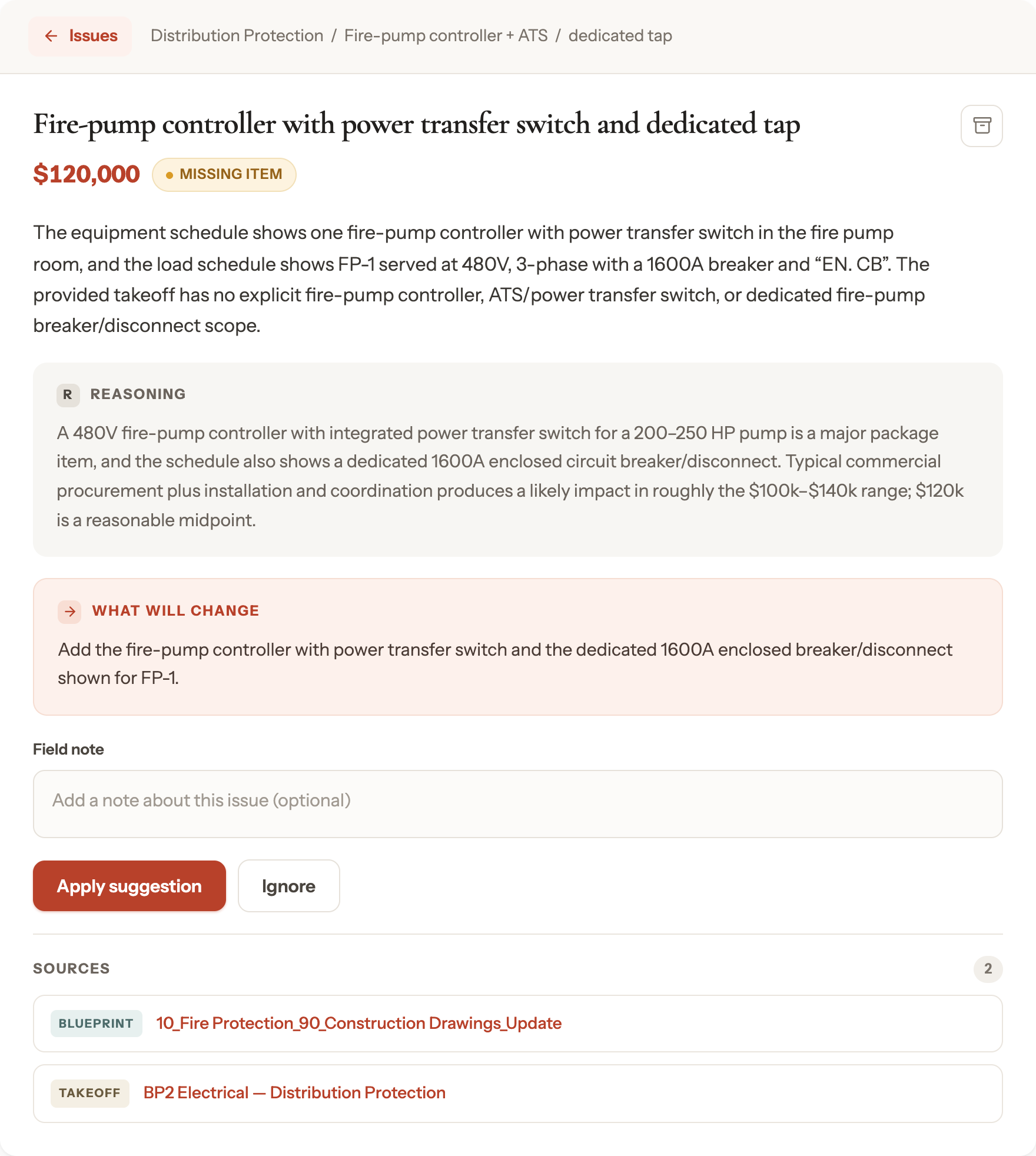
Makeoff reads the plans, specs, general notes, and addenda, then checks all of it against the takeoff you already built. Anything that lives in the documents but never made it into your numbers comes back as a finding, with the sheet it came from and what it's likely worth.You decide how to price it.
Makeoff makes sure you saw it while there's still time.
Page 257 says furnish and install the whole access-control system. Page 89 hands the devices to the security contractor. Page 298 says conduit and j-box only. Makeoff finds the conflict, puts every page that speaks to that scope side by side, and shows what the swing is worth.
You still make the call, by RFI or by picking a bid basis. Makeoff makes sure you know what each answer costs.


A BSL-3 lab needs every conduit and device box sealed gas-tight. No sheet in the set says that. NEC 300.7(A) and the containment standard do, and the labor shows up in your cost whether or not anyone drew it.
Makeoff reads the drawings against the code that governs them and flags the work nobody put on a plan, with the section number attached.
"It's a checkpoint. It's another me going through, looking at our estimates and projects and pointing out the things that can be very costly if missed."
Chief Electrical Estimator, multi-trade specialty contractor, Upper Midwest
Customer story
An electrical estimating group ran Makeoff bid review on live competitive bids for eight weeks and confirmed five catches their own review had not surfaced. The estimator who owned each project verified every one before pricing closed. Two of the five were sitting in addenda that contradicted a drawing note the team had already priced against.
Chief Electrical Estimator, multi-trade specialty contractor, Upper Midwest
Read the story
No setup · Runs on your live bid
Send us a current plan set. We'll run the review and walk your team through every finding it surfaces.
