Precision Electrical is a commercial electrical contractor based in Indianapolis, Indiana. The company focuses on projects that require disciplined estimating, coordinated execution, and dependable delivery for general contractors. With a steady flow of mid-sized commercial work, Precision regularly produces 10 to 15 bids per month and manages projects where scope definition and labor accuracy directly affect profitability.
As bid volume increased and project requirements became more detailed, Precision evaluated how its estimating process could scale without sacrificing quality or internal consistency. Leadership wanted a system that could apply labor and material logic in a repeatable way while maintaining visibility into every decision inside the estimate.
To support that goal, Precision implemented Makeoff, an autonomous AI estimating platform built for electrical contractors.
Over a six-month period, Precision processed more than $1.5 million in estimates through the platform while producing 10 to 15 bids per month. Estimating for projects over $50,000 is now standardized, with labor logic and margin structure applied consistently across jobs.
Each estimate contains recorded material selections and labor assignments, creating a documented foundation before work begins. For a contractor operating at production volume, the system has become part of daily operations rather than an experiment
Many electrical contractors rely on spreadsheets built from experience. These tools are familiar and fast, but they depend heavily on memory and manual judgment. Differences in specifications can be overlooked, code nuances may not be captured, and the reasoning behind final numbers is rarely documented in a structured way. Others use assembly-based estimating software with pricing databases. These platforms provide structure, but material selection, labor application, and judgment calls still depend on the estimator. The software organizes inputs, yet the underlying decisions remain manual.
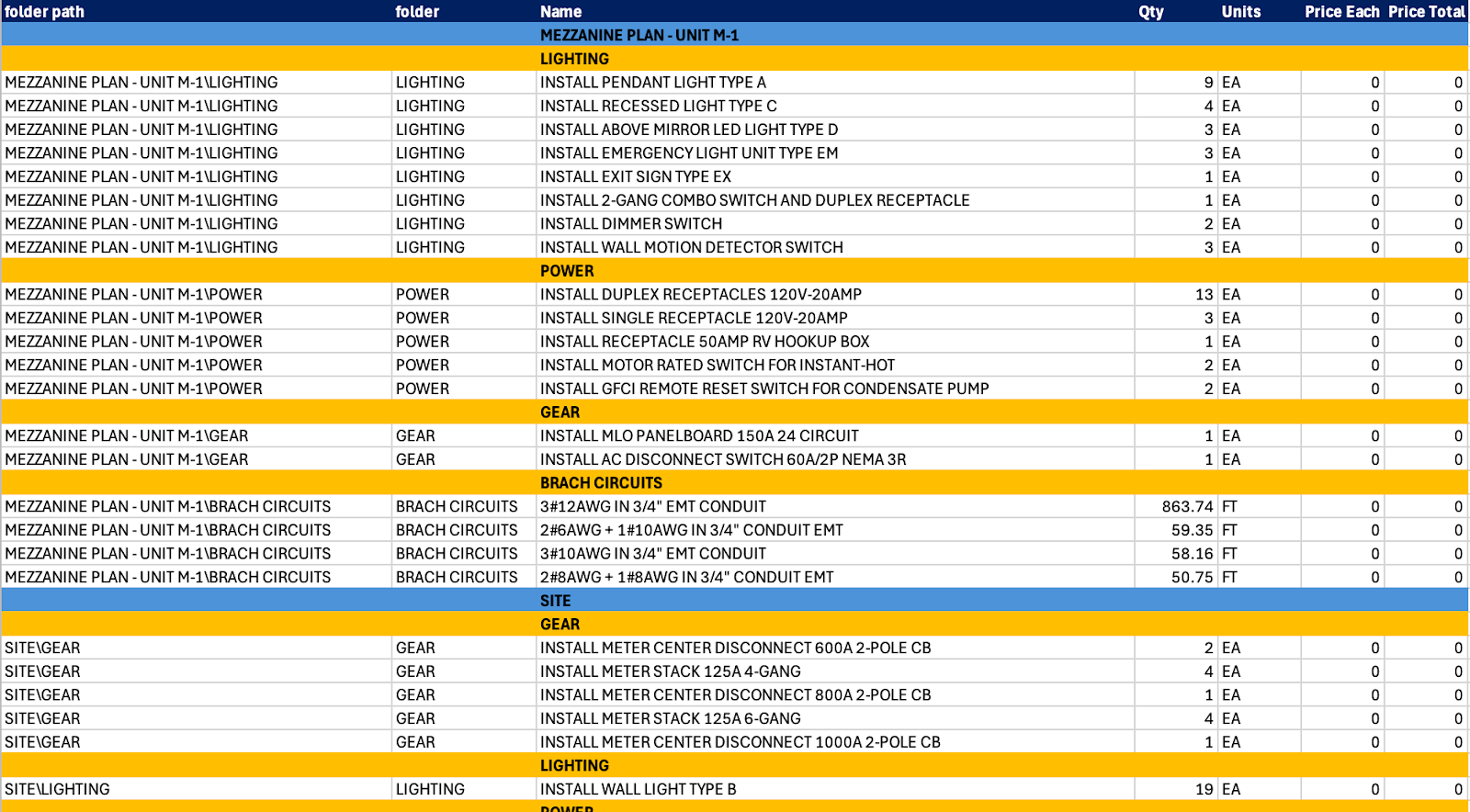
Many electrical contractors rely on spreadsheets built from experience. These tools are familiar and fast, but they depend heavily on memory and manual judgment. Differences in specifications can be overlooked, code nuances may not be captured, and the reasoning behind final numbers is rarely documented in a structured way.
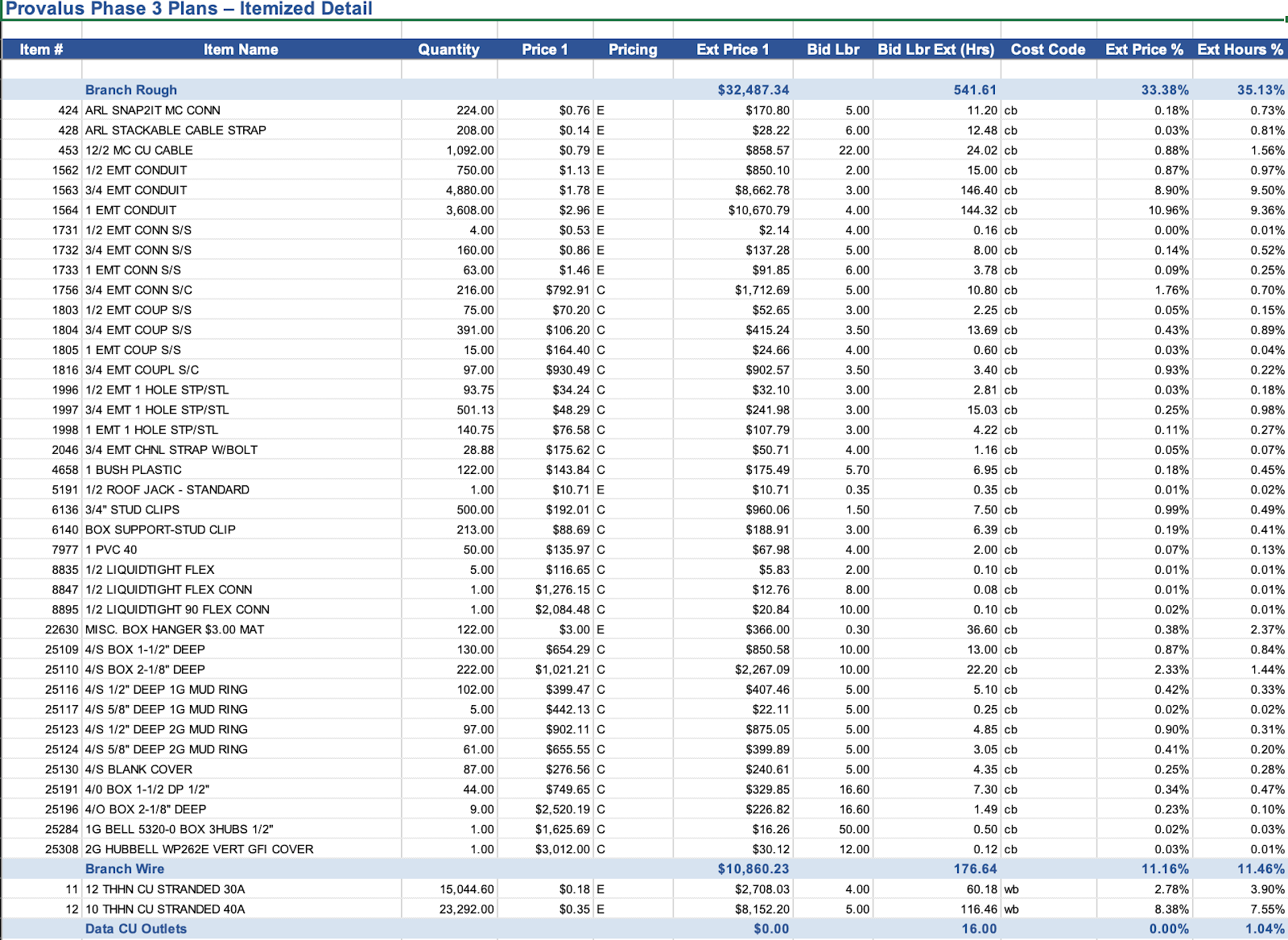
Others use assembly-based estimating software with pricing databases. These platforms provide structure, but material selection, labor application, and judgment calls still depend on the estimator. The software organizes inputs, yet the underlying decisions remain manual.
Precision adopted a different model by implementing Makeoff as its estimating engine.
The system turns takeoff quantities into real material selections, selects products that align with project specifications, applies labor automatically, incorporates built-in margin logic, and records each decision inside the estimate. The AI builds the structure of the bid, and Precision’s team reviews and validates it prior to submission.
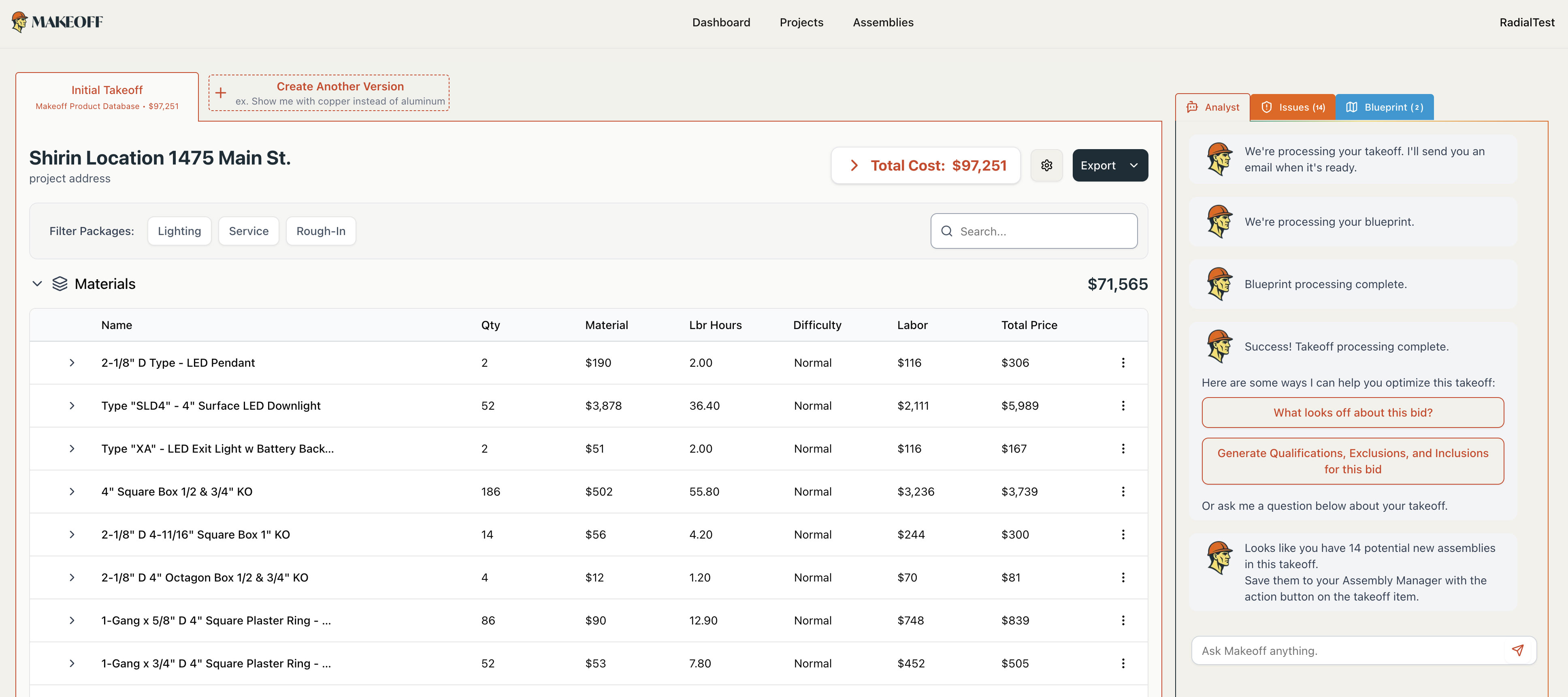
The system is designed to leverage AI capabilities for quotes customized to the specifics of each job. Rather than producing a single output, it evaluates products and components individually, applying labor and specification logic at the item level.
Each material is assessed separately. Labor is applied per item. Selections follow embedded specification and code logic. Every decision is recorded. Thousands of structured evaluations occur within a single estimate, producing a documented result that can be reviewed and traced.
For general contractors, estimating quality directly affects project risk. Scope gaps, procurement delays, and budget surprises often originate in incomplete bids.
Precision’s AI-driven workflow supports material selections that match specifications, consistent labor application, and documented decision-making throughout the estimate.
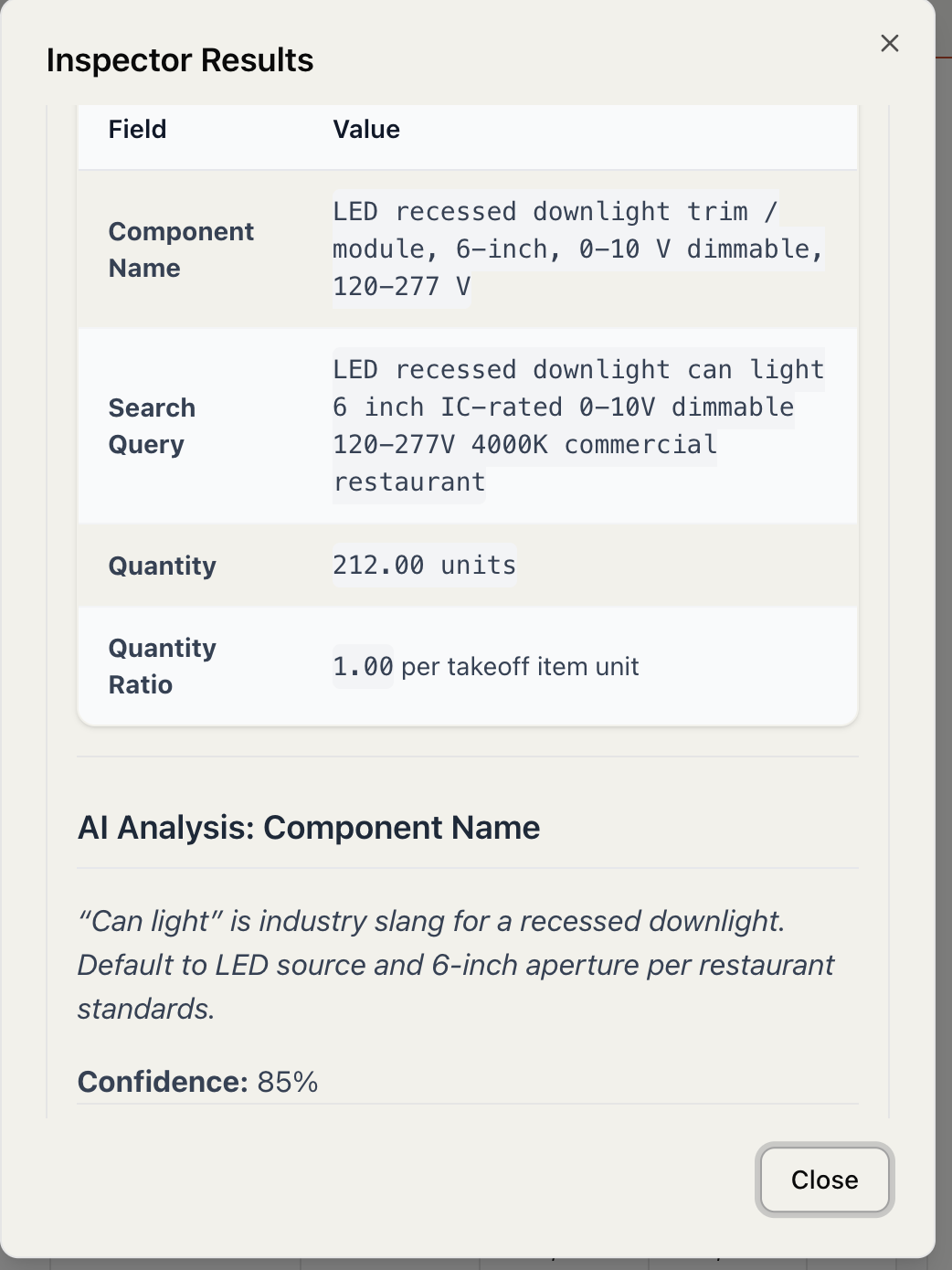
Every material and labor choice is documented. That creates a clearer scope and a stronger proposal.
Because each estimate is structured at the item level, project managers inherit a detailed breakdown of materials and labor at the start of execution. Material planning begins with defined selections rather than broad assumptions.
Budget tracking aligns more closely with the original estimate because labor and product logic are embedded from the outset.
Field teams work from a clearer scope, reducing ambiguity between what was priced and what must be installed.
Within six months, Precision has processed more than $1.5 million in estimates through autonomous AI. The company consistently produces 10 to 15 bids per month using the system and has standardized estimating for projects over $50,000. Manual assembly work has been reduced, and margin and labor application follow a consistent structure across jobs.
Autonomous AI now builds the foundation of Precision’s estimates. The team validates and submits. Each decision is recorded within the estimate itself. The shift represents a structural improvement in how bids are produced and documented across the company.